 (206) 222-7194
7 Reasons Your AC Is Making a Hissing Noise (And What to Do)
Is your AC making a hissing noise? Find out the common reasons behind it and what steps you can take to fix the issue quickly.

 8 min read
 HVAC Angel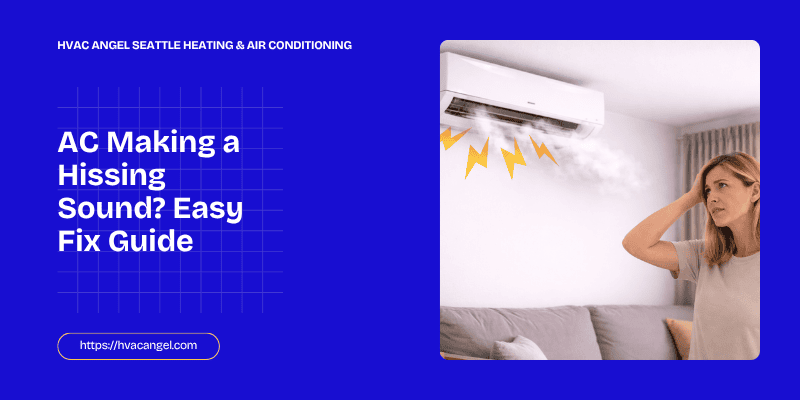
You turn on your air conditioner, and then you hear it. A faint hissing sound that was not there before. At first, it does not seem like a big deal. The air is still running, and your home still feels okay. But that sound sticks in your head. Something clearly is not right.
It can sound like air slowly leaking or pressure slipping out somewhere inside the unit. And since your HVAC system depends on sealed parts and controlled pressure, even a small issue can show up like this.
Ignore it for too long, and you might end up dealing with weak cooling, higher bills, or a bigger repair than expected.
Let’s figure out what that sound is trying to tell you.
7 Common Causes of AC Hissing Noise
Before getting into specific causes, here’s the simple truth. A hissing sound usually means something is escaping. Air, gas, or pressure. Your AC is not supposed to leak anything, so even a small gap can create that noise.
Some reasons are minor. Others can turn into expensive repairs if you let them sit.
1. Refrigerant Leak
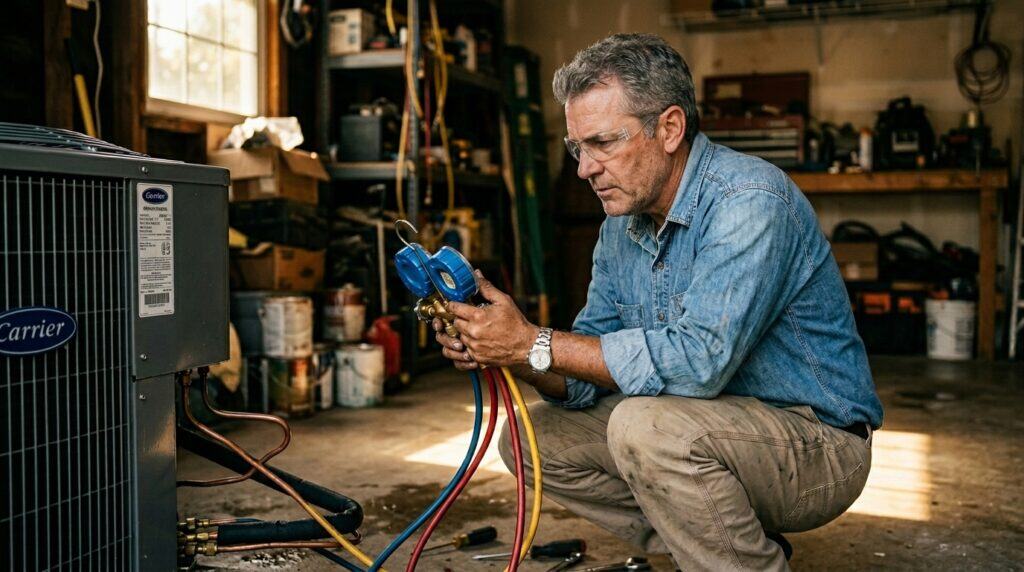
This is the most common reason behind an AC making hissing noise. The refrigerant inside your air conditioner moves through coils and lines under pressure. When small cracks or loose connections form, the refrigerant starts to escape, which creates that steady hissing or sometimes a light bubbling sound.
Leaks often develop in the evaporator coil, condenser coil, or at refrigerant line connections and seals. Along with the noise, you might notice warm air from vents, longer run times, or even ice forming on the evaporator coil. In many cases, energy bills also go up without a clear reason.
This is not something to ignore. Low refrigerant affects cooling performance and puts extra strain on the compressor, which can lead to serious damage if left unchecked.
2. Leaky Air Ducts
If the hissing sound comes from vents, ceilings, or inside walls, the problem may be a duct leak rather than the air conditioner.
Air travels through ducts under pressure, so even a small gap or loose joint lets air escape and creates a steady hissing noise. This can happen due to loose duct joints, worn sealant, damaged flexible ducts, or poor installation.
As a result, airflow drops in certain rooms, cooling feels uneven, and the system uses more energy to maintain the same indoor temperature.
3. Compressor Problems
If the hissing is coming from the outdoor unit, the compressor could be the reason. It handles the refrigerant flow, so any pressure imbalance inside it can create that sound. This usually links to an internal valve leak, excess pressure, or wear inside the compressor.
Watch for signs like the system struggling to start or cooling that does not stay consistent. Once the compressor starts acting up, the risk of a bigger failure goes up quickly.
4. Faulty Expansion Valve
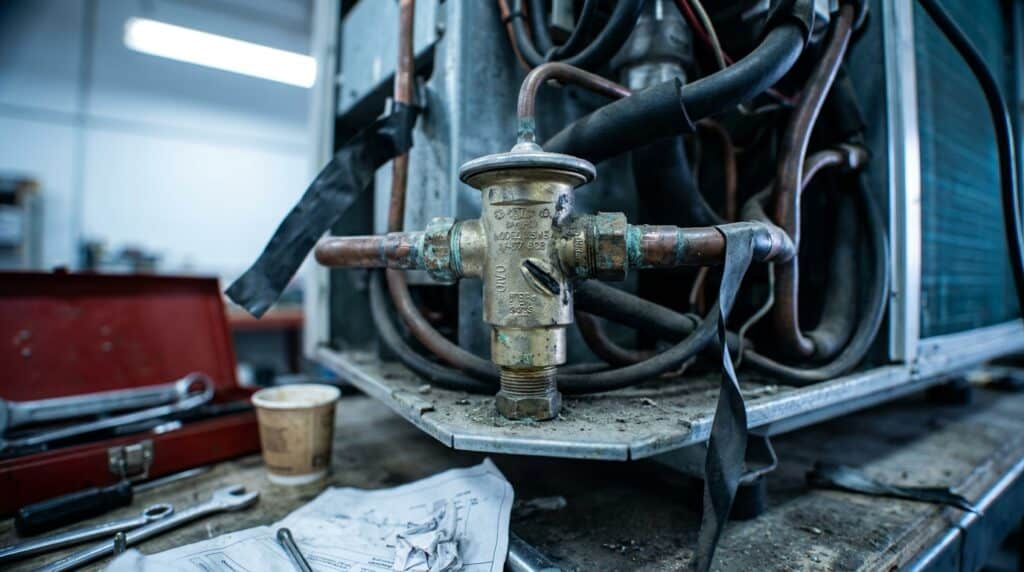
Refrigerant does not enter the evaporator coil on its own. The expansion valve controls that flow, and when it stops working properly, pressure inside the system no longer stays stable. That shift can produce a hissing sound.
The noise is usually heard near the indoor air handler. Cooling may feel uneven, and airflow can vary from room to room.
In heat pump setups, a similar issue can come from the reversing valve since it also controls refrigerant movement. This part needs proper inspection. If it is failing, replacement is the only reliable fix.
5. Dirty or Clogged AC Components
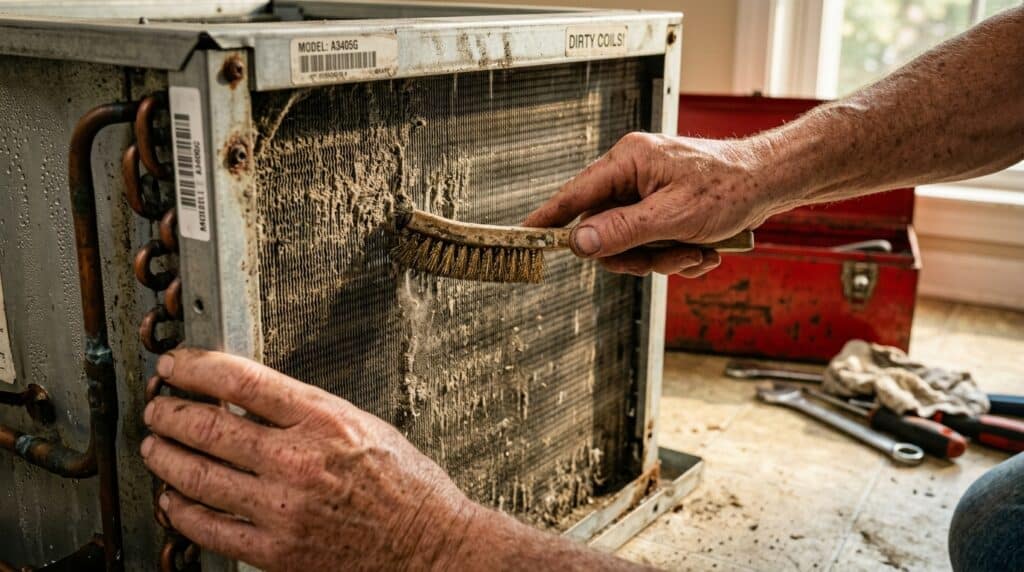
Dirt inside the system can change the pressure and create a hissing or whistling noise. When airflow gets blocked, the air starts forcing its way through tighter spaces.
Check the air filter first. If it is clogged, airflow drops immediately. The same happens when the evaporator coil is coated with dust or the condenser is packed with debris. As this builds up, cooling weakens, and the system runs longer than it should.
6. High Internal Pressure in the System
A quick hiss from the outdoor unit can come from pressure building up inside and releasing for a moment. It is not a leak in this case, but a release happening within the system.
Blocked airflow, extra refrigerant in the line, or wear inside the compressor can push the pressure higher. When that keeps happening, the system is not running in a stable condition and needs a proper check.
7. Normal Refrigerant Flow
An AC making hissing noise does not always mean something is wrong. At times, it is just refrigerant moving through the system or pressure settling after the unit shuts off.
You may hear it near the expansion valve or along the refrigerant line for a few seconds. The sound remains soft and fades on its own. If it only happens when the system turns on or off, and cooling feels normal, it is part of normal operation.
How to Check an AC Hissing Noise
That hissing does not tell you much until you figure out where it is coming from. A quick check around the system can make noise diagnosis easier for a homeowner before calling for help.
Step 1: Identify Where the Noise Is Coming From
Walk around while the system is running and pay attention to where the sound gets louder. Check near the indoor air handler, then step outside to the condenser, and finally listen around vents and ductwork. Where the sound feels strongest usually points you in the right direction.
Step 2: Check Airflow
Start with the air filter. If it is packed with dust, airflow drops and air gets pushed through tighter spaces, which can create a hissing sound. Check the vents and return air openings as well. If they are blocked or closed, air cannot move properly through the system. This kind of airflow restriction changes the pressure inside, and that is when the noise starts.
Step 3: Observe Cooling Performance
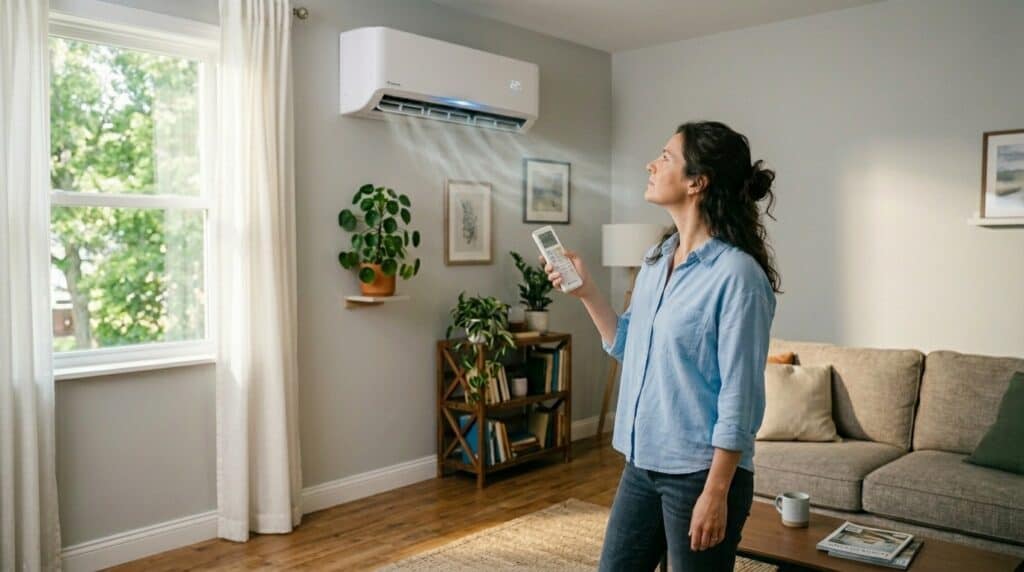
Turn the system on and check the vents directly. The air should feel properly cool. If warm air is coming out, something is off inside the system. Keep an eye on how long the unit runs. If it takes longer than usual to reach the set temperature, efficient cooling has dropped.
Step 4: Inspect Visible Ductwork
Listen near the vents while the system is running. If the hissing is louder there, air could be leaking somewhere in the duct. Check any exposed ducts in the attic or basement, especially around the joints. A small duct crack or loose connection can let air escape before it reaches the room. When that happens, less cool air comes through the vents during summer heat, and the system runs longer.
How to Fix an AC Making a Hissing Noise
DIY Fixes for Minor Issues
Some hissing sounds come from small issues that build up over time. Checking a few basic things can help you rule those out first.
- Check the air filter. A dirty filter can restrict airflow and change pressure inside the system. Replace it if needed.
- Look at the vents. Keep them open and clear so air can move properly.
- Inspect visible ductwork. A small ductwork gap or loose joint can let air leak and create noise.
- Check the outdoor unit. Clear away dirt or debris around the condenser so the system is not struggling.
If your air conditioner is still making a hissing noise after this, it is time to schedule a technician inspection before the problem gets worse.
Professional HVAC Repairs
When the noise does not go away or the cooling starts to drop, the system needs a closer look. At this stage, professional repair helps prevent further system damage.
A technician will handle things like:
- Refrigerant leak detection to locate hidden leaks
- Refrigerant recharge and repair of damaged lines
- Compressor repair or full replacement if needed
- Expansion valve replacement when the flow is not controlled properly
- Duct sealing and airflow balancing to fix air leaks
Along with these fixes, proper maintenance helps keep the system stable and reduces the chances of the issue returning.
Stop the Hissing Before It Turns Into a Bigger Repair
A hissing sound from your AC is not something to ignore. It can point to a pressure imbalance, a refrigerant leak, or air escape through cracks. If the sound keeps coming back, the problem is already there.
A proper repair service can pinpoint the issue and help avoid major system damage.
If your AC is still making that noise, HVAC Angel can handle it. Our team checks the system properly, finds where the issue is coming from, and fixes it. From leak detection to sealing duct leaks and replacing damaged components, everything is covered so your system runs the way it should.
FAQs
Is a hissing air conditioner dangerous?
Not always, but it should not be ignored. A brief hissing sound during the cooling cycle can be normal, but a constant hissing may point to a refrigerant leak, low pressure, or even a compressor issue. These problems can affect system safety and performance over time.
Should I turn off the system if it starts hissing?
If the sound is loud or does not stop, it is better to turn off the system. Running it in that condition can lead to more damage, especially if refrigerant levels are dropping. A quick check followed by timely repair can prevent bigger issues.
How much does it cost to repair a refrigerant leak in an AC?
The cost depends on where the leak is and how severe it is. Small fixes and refrigerant recharge cost less, while damaged coils or major leaks can increase the price. Early detection usually keeps the repair more affordable.
Is AC hissing normal during startup?
A soft hissing for a few seconds during startup can be normal as pressure settles in the system. If the sound continues or gets louder, it is no longer part of normal operation and should be checked.
Talk to HVAC Angel about heating or cooling service. We explain the problem and the price before any work begins.
(206) 222-7194 Request a callback