 (206) 222-7194
How Much Does AC Compressor Replacement Cost in 2026?
Replacing an AC compressor is a major expense. See real cost ranges and understand when it may be smarter to install a new system rather than repairing the old one.

 8 min read
 HVAC Angel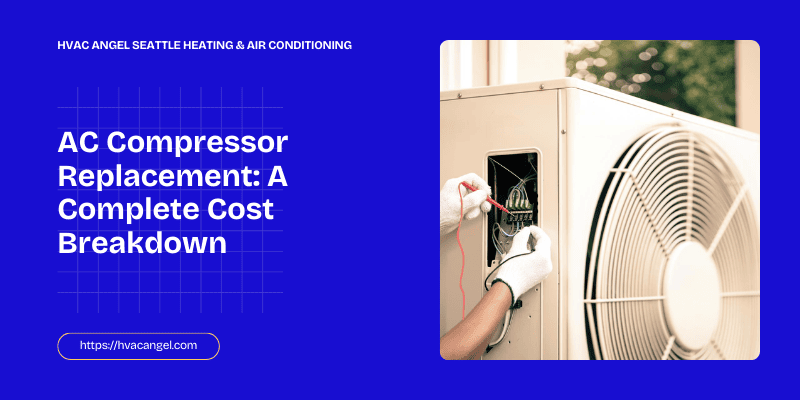
Last July, when temperatures in Seattle climbed higher than usual, many homeowners realized how much they rely on their air conditioning. You turn it on expecting cool air, but instead, the house feels the same. Maybe even warmer. After a service visit, you hear the words no one wants to hear. The compressor has failed.
At that point, the concern is not just comfort. It is cost. The compressor keeps refrigerant moving through your system. When it stops working, the entire unit stops cooling.
Compressor replacement is one of the most expensive AC repairs you can face. In Seattle, most homeowners spend between $1800 and $2600, though pricing can start around $800 and climb past $2800 depending on the system, labor rates, and refrigerant type.
In this guide, we will give you a clear breakdown of what you are paying for and whether replacement is the right move or not.
8 Major Factors That Influence AC Compressor Replacement Cost
Compressor replacement does not come with a flat price. What your neighbour pays could look very different from your estimate. A few key details inside your system determine how high or low that number goes.
1. System Size and Speed
Your AC size directly affects compressor pricing. Larger systems need larger compressors and more refrigerant to move through the system. If you have a bigger home in Seattle, your equipment is naturally sized higher, which increases the part cost.
| AC Size in Tons | BTU per Hour | Typical Part Cost Range |
| 1.5 | 18,000 | $700 - $1,300 |
| 2 to 2.5 | 24,000 - 30,000 | $800 - $1,600 |
| 3 to 3.5 | 36,000 - 42,000 | $1,000 - $2,200 |
| 4 to 4.5 | 48,000 - 54,000 | $1,200 - $2,300 |
| 5 or more | 60,000 or more | $1,500 - $3,000 |
2. Type of Compressor
The kind of compressor inside your unit also changes the price. Some systems are simple, while others are built to adjust output more precisely.
Single-stage compressors have only one setting. When they turn on, they run at full output, then shut off once the temperature is reached. They are usually the least expensive to replace.
Two-stage compressors can run at a lower level most of the time and switch to full output only when needed. It helps with comfort and energy control.
Variable speed systems adjust continuously based on demand. They cost more because of their electronic controls, but they run quieter and can lower energy bills over time.
| Staging Type | Part Cost Range |
| Single Stage | $500 - $1,500 |
| Two Stage | $1,000 - $2,500 |
| Variable Speed | $1,500 - $3,000 or more |
3. HVAC Type
What you have installed at home changes the numbers. A window unit is small and self-contained. A central air system or heat pump connects to ductwork and cools the entire house, which means more parts and more labor.
With window units, replacing the whole unit is often cheaper than installing a new compressor. For central systems, mini splits, and heat pumps, compressor replacement is more common since the overall equipment cost is higher.
| HVAC System Type | Typical Compressor Replacement Cost |
| Central AC Units | $800 - $2,700 |
| Heat Pumps | $800 - $3,000 |
| Mini Split Systems | $600 - $2,200 |
| Window Units | $150 - $700 |
4. Brand
The name on your outdoor unit also affects the cost of a new compressor. Each manufacturer uses slightly different internal designs and pricing structures. Availability of parts in Seattle can also influence how much you are quoted.
Some brands are priced higher because of proprietary components, and some are known for more budget-friendly replacement parts.
| Brand | Typical Compressor Part Cost |
| Carrier | $1000 - $2,000 |
| Coleman | $550 - $1,500 |
| Goodman | $400 - $1,200 |
| Rheem | $600 - $1,400 |
| York | $550 - $1,500 |
| Lennox | $600 - $2,300 |
5. Warranty Coverage
Before you agree to any estimate, check your warranty paperwork. Many manufacturers offer a parts warranty that lasts up to 10 years. Labor coverage, however, is usually much shorter unless you purchased extra protection.
If your manufacturer's warranty is still active, the compressor itself is often covered. That part alone can be worth $500 to $1,500 or more. You would still pay for labor, refrigerant, which may range from $100 to $1000 and any shipping costs.
| Warranty Type | Coverage Details | Possible Out-of-Pocket Costs |
| Manufacturer Warranty Active | Compressor part only | Labor, refrigerant, shipping |
| Extended or Labor Warranty | Compressor and labor, based on the plan | Low or none, depending on terms |
6. Refrigerant Type
The refrigerant your system uses can raise the repair bill more than you expect. If your unit runs on R 22, costs are usually higher because this refrigerant is no longer produced. What is left in the market is limited and priced accordingly. For many older systems, putting money into an R-22 repair does not always feel practical.
Most newer units use R-410A or other updated options. These are easier to find, but you still pay based on how much your system needs.
During compressor replacement, the existing refrigerant is removed, the system is checked carefully for leaks, and then it is refilled. The type and amount required both affect the final number.
| Refrigerant | Compressor Cost Range |
| R 22 | $800 - $1,800 |
| R 410A | $700 - $1,600 |
| R 32 | $800 - $1,800 |
| R 454B | $900 - $2,000 or more |
7. Labor Charges
Replacing a compressor is not quick work. In most homes, it takes about 4 to 8 hours.
The technician first removes the refrigerant as required under federal Clean Air Act Section 608 guidelines. Only certified professionals can handle that step. After that, the old compressor is taken out, the refrigerant lines are cut and sealed into the new unit, the wiring is reconnected, and the system is tested for pressure. A vacuum is pulled to remove moisture before the refrigerant is added back in.
In Seattle, labor for this type of repair usually falls between $400 and $1,200, depending on how easy the unit is to access and the condition of the system.
8. Season
In summer, companies are booked out, especially during heat waves. That rush often leads to higher repair costs. During cooler months, schedules are lighter, and pricing is usually more moderate.
| Season | Total Cost Range |
| Summer | $2,000 - $3,000 |
| Spring | $1,500 - $2,500 |
| Fall | $800 to $2,000 |
| Winter | $800 to $ 1,800 |
AC Compressor - Repair or Replace - How to decide?
This is where many homeowners pause. If the compressor quote comes back at $2,500, the next question is simple. Should you fix it, or put that money toward a new system?
A common rule contractors use is the 40 to 50 % guideline. If the repair cost is close to half the price of a brand-new air conditioner, replacement usually makes more financial sense. For example, if a full system replacement runs between $6,000 and $9,000, spending $2,500 on an older unit may not be the best long-term move.
A new system also brings added benefits. Higher SEER ratings mean better efficiency. In Seattle, where electricity rates are not cheap, efficiency can lower your monthly bills over time.
If your system is over 10 years old, has rising energy bills, and a history of repairs, replacement often provides more stability. At HVAC Angel, the team looks at system age, past repair records, and your current energy costs before recommending the right direction for your home.
Signs Your AC Compressor Is Failing
1. AC is blowing warm air
When the system runs, but only warm air comes through the vents, something is wrong in the cooling cycle. If the compressor fails, the entire AC system cannot move refrigerant the way it should.
2. Loud grinding or clanking from the outdoor unit
Sharp metal sounds from the outside unit are not normal. Internal components may be worn or damaged.
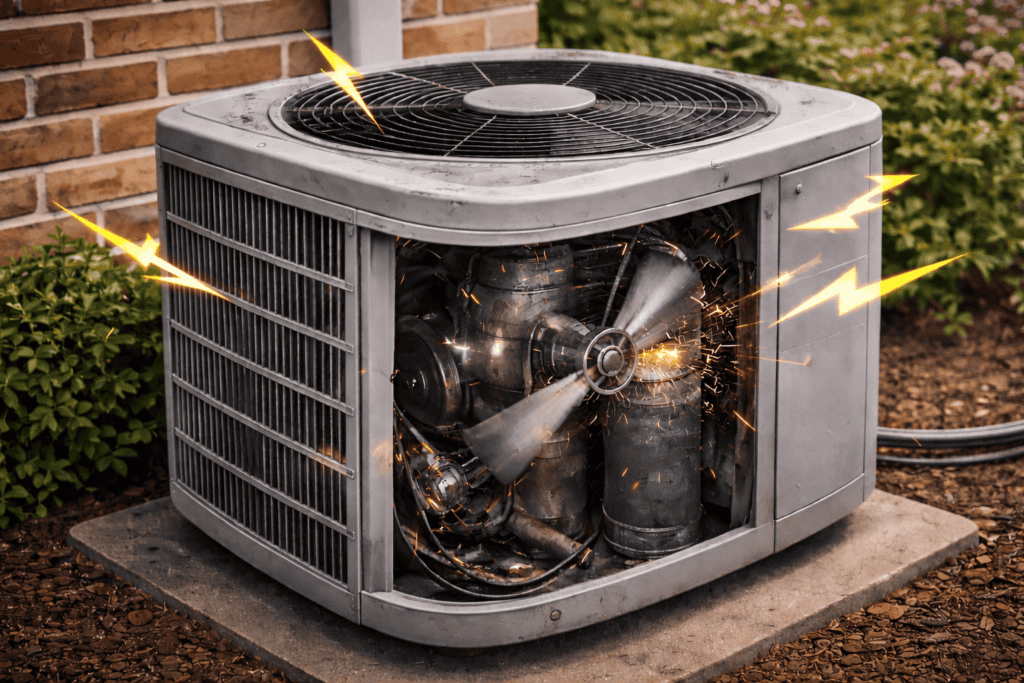
3. Hard starting or frequent breaker trips
If the unit struggles to start or repeatedly trips the breaker, it may be consuming excessive power. Electrical strain points to compressor trouble.
4. Outdoor unit running, but indoor air is not cooling
If the fan outside is spinning, but the indoor temperature is still high. That usually means pressure is not building properly inside the system.
5. Sudden spike in electricity bill
If your bills are increasing and nothing has changed, the unit may be running longer. More run time means more power being used.
6. Increased indoor humidity
The house feels damp even though the AC is on. When the cooling drops, moisture stays in the air instead of being removed.
Make the Right Call Before You Spend Thousands
AC compressor replacement in Seattle usually falls between $1,400 and $3,200 when you include parts and labor. The exact price shifts based on system size, compressor type, refrigerant, brand, and the time of year. That is why estimates can vary from one home to another.
Before you replace the compressor, look at how old the unit is and how it has been performing. A faulty compressor in a newer system may be worth fixing. In an older unit that has already needed repairs, putting more money into it may not bring much return.
If you want a clear answer for your home, have it checked properly. HVAC Angel provides AC repair, cleaning, and entire system replacement across Seattle and nearby suburbs, with straightforward pricing and recommendations based on your actual equipment.
FAQs
How much does it cost to replace an AC compressor in Seattle?
In Seattle, the price usually falls between $1,400 and $3,200. The cost to replace changes from home to home. A smaller unit will not cost the same as a larger one, and the refrigerant type can shift the total. Labor rates also increase the total cost. The only way to know your exact number is to have it inspected.
Is it worth replacing a compressor on a 15-year-old AC unit?
At 15 years, most units are already near the end of their lifespan. You can replace an AC compressor and get it running again, but you have to ask how much longer the rest of the system will last. Sometimes it works out. Other times, another repair shows up a year later.
Does homeowner’s insurance cover compressor failure?
In most situations, it does not. If the compressor stopped because of age or normal use, insurance usually will not cover it. If it failed after something sudden, like a lightning strike, then you might have coverage. The reason behind the damage matters.
What happens if I delay compressor replacement?
Running the air conditioning system with a bad compressor can cause more damage inside. Other components may be affected if it keeps operating in that condition. Waiting too long can increase the repair bill.
Can a bad compressor increase electricity bills?
Yes. When the compressor starts wearing out, the air conditioning system does not cool the house quickly. It stays on longer than usual. That longer operation pulls more electricity. Many homeowners first notice something is wrong when the monthly bill goes up for no clear reason.
Talk to HVAC Angel about heating or cooling service. We explain the problem and the price before any work begins.
(206) 222-7194 Request a callback