 (206) 222-7194
AC Drain Line Clogged: Prevention Guide for Homeowners
Discover how to clean a clogged AC drain line and prevent damage to your air conditioning system. Learn the importance of maintaining your condensate drain line.

 7 min read
 HVAC Angel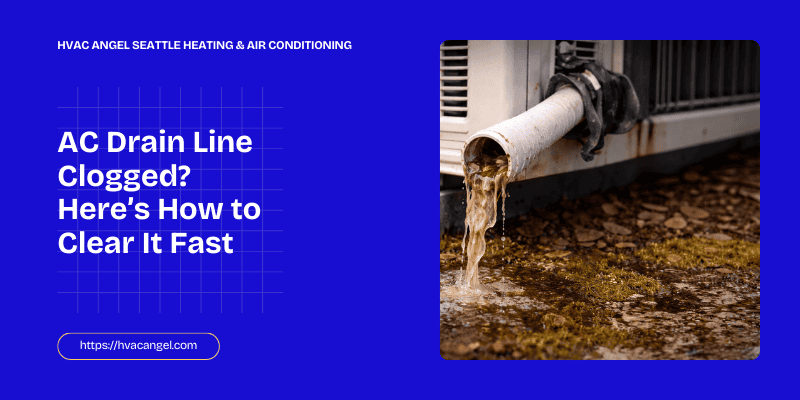
You walk past your AC and notice something you cannot ignore. The floor feels damp near the unit. A light mark is forming on the ceiling below it. Nothing is pouring out, nothing dramatic. Just enough to make you stop and think, this should not be happening.
The cooling still works. Air is coming through the vents like always. That is what makes it tricky. You would expect a loud noise or warm air if something was wrong, but the problem hides in plain sight.
During hotter days in Seattle, your AC runs longer than usual. As it cools the air, it also removes moisture from it. That water has one exit path. If it gets blocked, the moisture starts backing up into the unit and eventually into your living space.
It does not take much for this to turn into stained drywall and musty odours. Keep reading. You will understand what causes the blockage and how to stop it from damaging your home.
Why Is My AC Drain Line Clogged? Common Causes
1. Algae and Mold Growth
Algae and mold are the most common reasons a drain line gets blocked. The pipe stays wet during the cooling season, and a slimy layer forms inside it. Dust collects in that layer, the passage becomes narrow, and water cannot drain out properly.
2. Dust, Dirt, and Airborne Debris
When the filter is packed with dust, air keeps pushing that dust through the system. It settles on the coil. The water that forms there pulls the dirt down into the drain line.
That dirt stays inside the pipe. Eventually, it takes up space and blocks the water from flowing out.
3. Outdoor Blockage at the Exit Point
The drain pipe releases water outside your home. That small opening can get covered by leaves, dirt, insects, or spider webs. When that happens, the water has no clear path out.
Sometimes rodents build nests near the outlet. In other cases, mulch, soil, or plants grow over the pipe and close it off, which keeps the water trapped inside the line.
4. Improper Installation or Pipe Slope
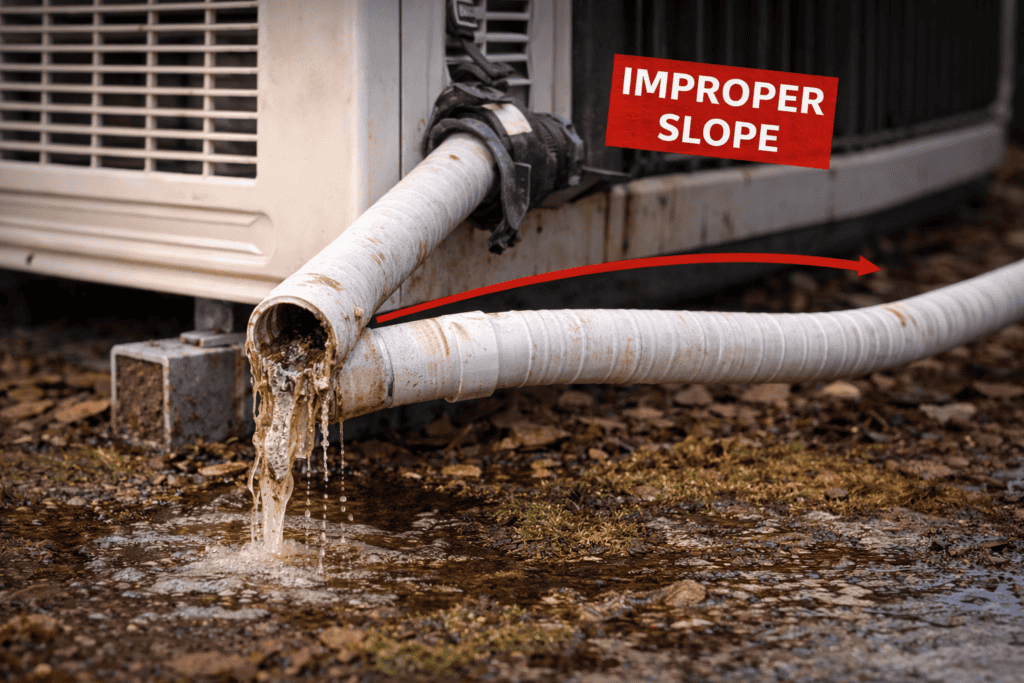
Your drain pipe needs a slight tilt so water can move out on its own. If it was installed flat or set at the wrong angle, some water remains in the line.
A low dip in the pipe can hold that water in one spot. When it sits there, buildup forms, and the line can clog.
5. Poor Preventive Maintenance
If the system does not receive yearly service, the drain line usually gets ignored. No one clears it out, and the residue inside the pipe stays there.
Signs Your AC Drain Line Is Clogged
Water Pooling Around Indoor Unit
You walk into the room and see water near your indoor unit. It is usually right below the air handler or around the furnace cabinet. If you ignore it, the water can spread to the wall or floor nearby and leave visible damage.
Musty or Moldy Odor
If your home suddenly smells damp when the AC runs, the drain line could be the reason. Water collecting inside the unit creates the kind of smell people describe as musty.
You may pick it up near the vents or when you stand close to the mechanical closet. It usually means mold has started growing somewhere inside the system.
AC System Shuts Off Unexpectedly
An air conditioner that powers down without warning can point to a drainage problem. Many units have a float switch placed in the drain pan. When water rises beyond a safe level, the switch interrupts power to the system.
Higher Indoor Humidity
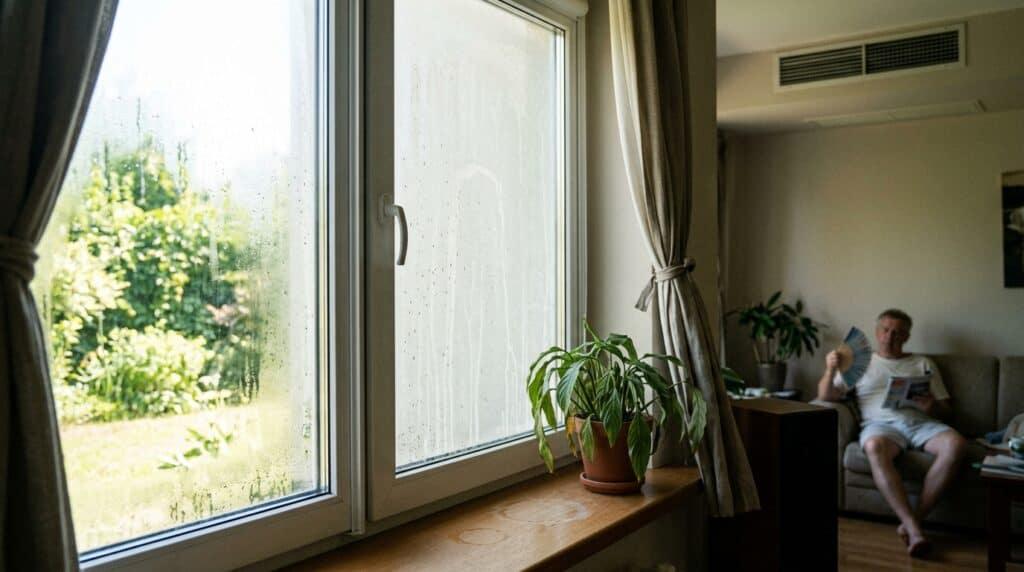
When the condensate drain line is clogged, water from the evaporator coil cannot drain out. Moisture remains inside the system, and the indoor air starts to feel damp. You may also see light condensation on the windows during warmer days.
Visible Water Damage
When the drain line backs up, the damage shows up inside the house. A ceiling stain can form if the unit is in the attic. Near the indoor unit, floorboards can swell, and paint can start lifting from the wall.
What Happens If You Ignore a Clogged AC Drain Line?
Ignoring a clogged drain line allows water to build up inside your air conditioning system. That moisture does not stay contained. It spreads into surrounding areas and affects both your home and the equipment.
- Ceilings, drywall, and insulation can absorb the moisture and become damaged.
- Mold can start growing inside ductwork and wall cavities.
- Metal HVAC parts can develop rust.
- Cooling performance can drop, making rooms feel less comfortable.
- Energy use can increase as the system runs longer.
- The unit can shut off when safety switches detect rising water.
- Water reaching electrical wiring can cause a safety hazard.
How to Diagnose a Clogged AC Drain Line
You can figure out a lot just by looking around the unit. Take it step by step.
Step 1: Turn Off the AC
First, shut the system down. Turn it off at the thermostat, then cut power at the breaker. It only takes a minute and keeps things safe.
Step 2: Inspect the Drain Pan
Remove the front panel and look inside. The pan under the evaporator coil should not be holding water. If it is full, the clogged drain line is not letting water out.
Step 3: Locate the Drain Line Access Point
Look for a white PVC pipe near the air handler. Most homes have one with a small cap on top. That pipe carries condensation outside.
Step 4: Check Outdoor Drain Exit
Follow the pipe to where it ends. Make sure the opening is clear. When the AC runs, you should see water dripping from it.
Step 5: Smell Near Vents
If the air near the vents smells damp, that usually points to standing water somewhere inside the system.
How to Fix a Clogged AC Drain Line (DIY Methods)
You can try clearing a clogged drain line yourself before calling a technician. Many times, the blockage is close to the outside opening.
Use a Wet Dry Vacuum
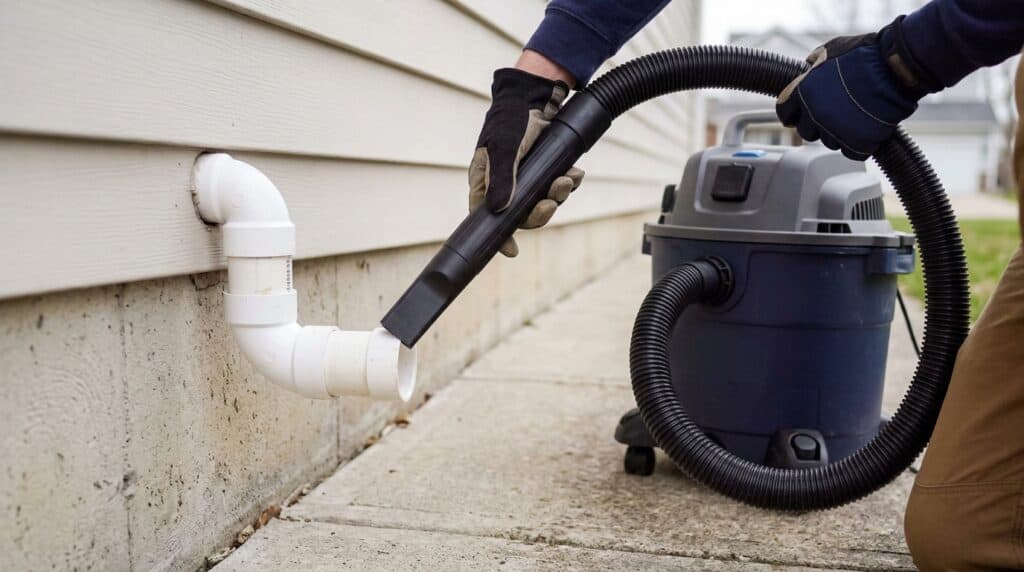
Find the small PVC drain pipe near the base of your home. Set the vacuum hose over the pipe opening. Turn it on and let it run for about a minute. If the clog loosens, you will see dirty water and debris enter the vacuum.
Flush with Vinegar Solution
The drain line near your indoor unit has a small cap on top. Remove the cap and pour 1 cup of distilled vinegar into the pipe. Wait 30 minutes.
Use Warm Water Flush
After using vinegar, pour warm water into the pipe. This helps flush the line and clear out the remaining dirt so the clogged drain line can open up again.
Important Safety Note: Do not use a regular household vacuum, and avoid chemical drain cleaners, as they can damage the PVC pipe and make the clogged drain line problem worse.
When to Call a Professional HVAC Technician
Sometimes the clogged drain line is not the only problem. If you have tried fixing it and things are still not right, it is better to have someone check the system.
Call a professional if:
- Your attempts to unclog the line do not work.
- The clog keeps coming back after a short time.
- The drain pan shows rust or cracks.
- You notice electrical problems near the unit.
- Water damage is visible on ceilings, walls, or flooring.
- The hvac system keeps shutting off even after you clean the drain.
How HVAC Angel Fixes Clogged AC Drain Lines
When you call HVAC Angel for a clogged drain line, the focus is simple. Clear the blockage fully and prevent it from coming back.
Our technicians use commercial-grade vacuum equipment to remove buildup inside the pipe. If the clog is deeper in the line, we use pressurized air or a drain snake to break it apart and clear it out. After that, we apply an algaecide treatment to reduce future growth. We also inspect the drain pan, test the float switch, and correct the pipe slope if it was installed the wrong way.
If you notice water near your unit, a damp smell indoors, or your AC shutting off, do not wait. HVAC Angel provides same-day AC repair, offers 24-hour emergency service, and makes booking simple by phone or online. Every repair is backed by a service guarantee with fair pricing.
FAQs
Can I unclog my AC drain line myself?
Yes, it is possible to clear a drain line with some simple tools, such as a wet-dry vacuum or a flush with vinegar and warm water. There are a lot of small clogs that are close to the outlet and are easily washed away. In case the water continues to fill up, or the line becomes clogged once more, then leave it to a technician.
How often should I clean my AC drain line?
Once a year is enough for most homes. The condensate drain line should be checked during routine AC maintenance to prevent buildup. If your system runs longer during the summer, flush the line once in mid-season.
Why does my AC keep shutting off randomly?
When water rises too high, the switch cuts power to protect your home from overflow. Clearing the blockage usually restores normal functions.
Will a clogged drain line increase my electricity bill?
Yes. If the drain line is clogged, your AC may run longer. When it runs longer, it uses more electricity. More electricity use means a higher bill.
Talk to HVAC Angel about heating or cooling service. We explain the problem and the price before any work begins.
(206) 222-7194 Request a callback