 (206) 222-7194
AC Fan Not Spinning: 7 Common Causes and How to Fix the Problem
Dealing with an AC fan that won’t spin? Find common causes, simple fixes, and signs that mean you need professional help.

 9 min read
 HVAC Angel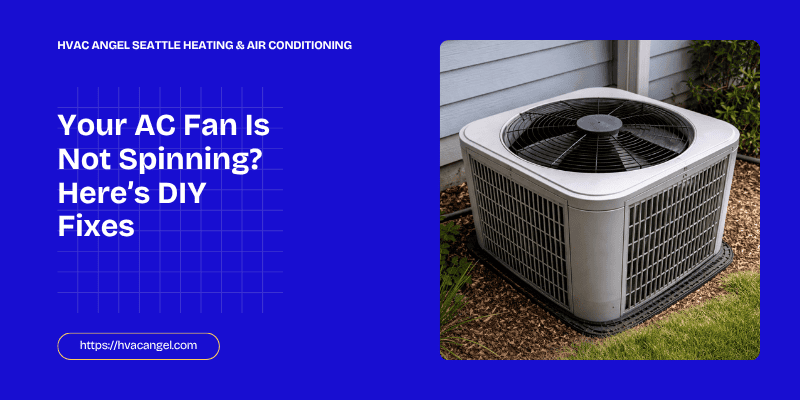
An AC without a spinning fan is like a car with the engine on but the wheels not moving. Something is running, but it is not doing what it is supposed to do.
That is why the room stays warm even when the system sounds fine. The fan keeps air moving through the unit, and once it stops, the whole cooling process starts to break down, even if everything else seems normal.
The real question is what made it stop in the first place, and how serious is it?
Let’s break it down so you know exactly what you are dealing with and what to do next.
What It Means When Your AC Fan Is Not Spinning
Your air conditioner relies on the fan to keep air moving through the system and into your home. That steady movement is what makes the cooling feel even and consistent.
When you notice the AC fan is not spinning, things start to feel off pretty quickly. The system may still run, but the air coming from the vents can feel weak or slightly warm. Some rooms may not cool down at all.
Meanwhile, the compressor keeps working without proper airflow, which can cause it to heat up and use more electricity than usual.
This issue can come from the outdoor condenser unit or the indoor blower fan. Once you know which one has stopped, it becomes much easier to figure out the next step.
7 Common Causes of an AC Fan Not Spinning
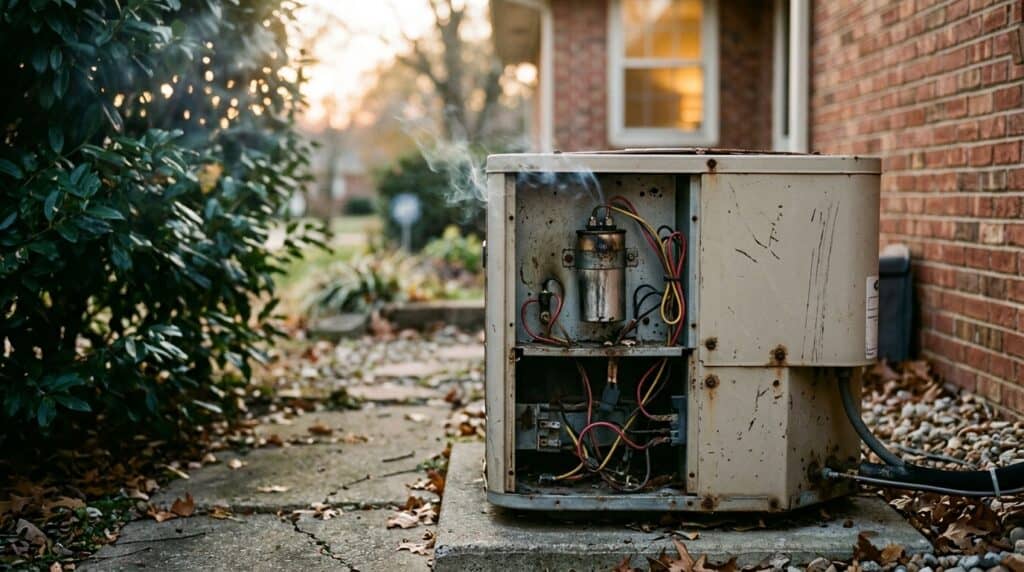
1. Faulty Capacitor
A capacitor gives your fan motor the push it needs to start. Without that startup boost, the motor struggles to turn the fan blades, even if the rest of the air conditioner seems to be running.
Over time, a capacitor wears out due to heat, electrical load, and normal wear and tear. Most units last around 5 to 10 years, but harsh conditions or power supply issues can shorten that life.
When the capacitor starts failing, the signs are usually easy to notice. You might hear a humming noise from the condenser unit, but the fan does not spin. In some cases, the fan may try to start and then stop. If the fan blades move after a gentle push, that often points to a bad capacitor or a weak run capacitor.
This is one of the most common issues technicians deal with, and capacitor replacement is usually a straightforward fix when caught early.
2. Burned Out Fan Motor
If the fan has stopped completely and does not respond at all, the fan motor itself could be the problem. This part handles the actual movement of the fan blades, so once it fails, airflow comes to a halt.
Heat, dust, and constant use can damage the motor. Dry bearings, poor lubrication, and debris buildup increase friction, which puts extra strain on the motor and leads to failure.
You may notice a burning smell near the condenser unit or find that the air conditioner shuts off again and again. These are clear signs the motor is no longer working properly. In most cases, a burnt-out motor cannot be fixed. Motor replacement is usually required to get the system running again.
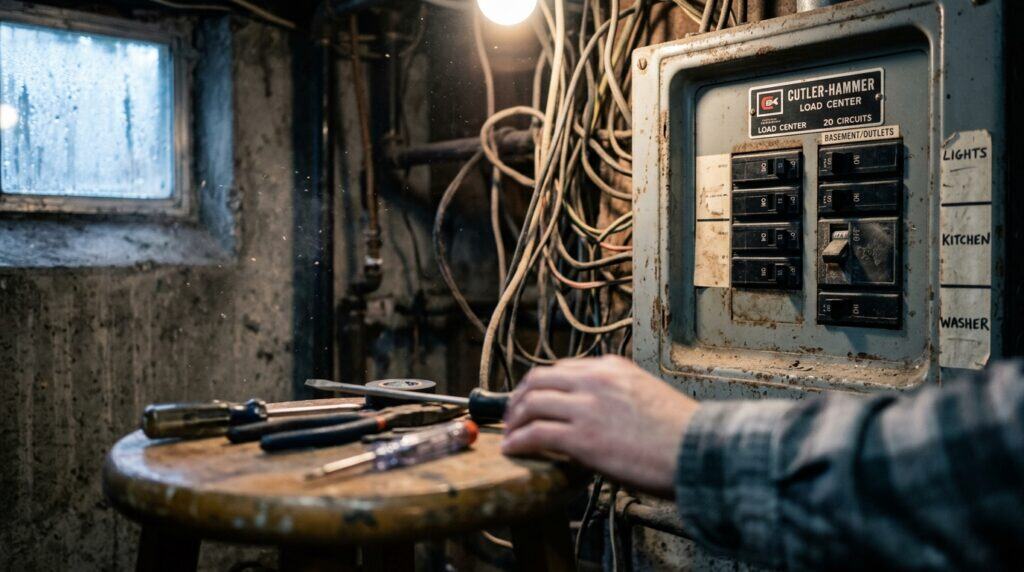
3. Tripped Circuit Breaker
Your air conditioner pulls a good amount of power every time it runs. If there is a sudden surge or the circuit gets overloaded, the circuit breaker can trip to protect the system.
When this happens, the AC shuts down completely. The thermostat may still appear normal, but the condenser unit and fan will not turn on.
4. Contactor Failure
The contactor inside your condenser unit controls the flow of power to the compressor and fan motor. It responds when your thermostat signals the air conditioner to start.
When the contactor stops working properly, that connection breaks. The system may try to start, but nothing actually turns on. You might hear a clicking sound as it tries to engage, but the fan and compressor stay still.
Dirt, debris buildup, and constant electrical use can wear it down and affect how it handles voltage.
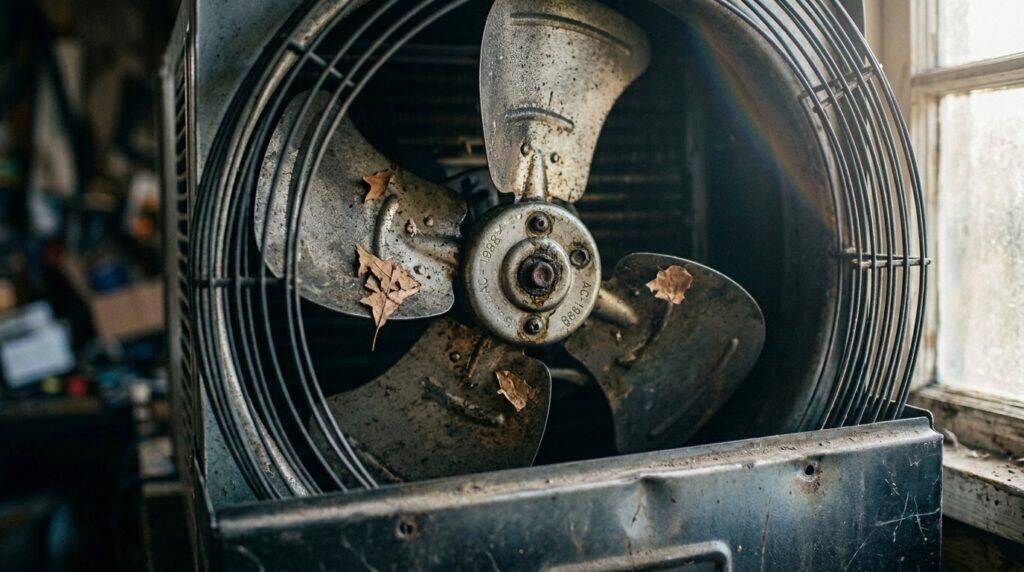
5. Debris Blocking the Blades of the Fan
Your outdoor unit picks up all kinds of stuff from around the house. Dry leaves, dust, small twigs, it all ends up around the fan.
If something gets stuck in there, the blades of the fan cannot move properly. You might hear a rough noise or see the fan start and then stop, as if it is struggling.
6. Dirty or Clogged Air Filter
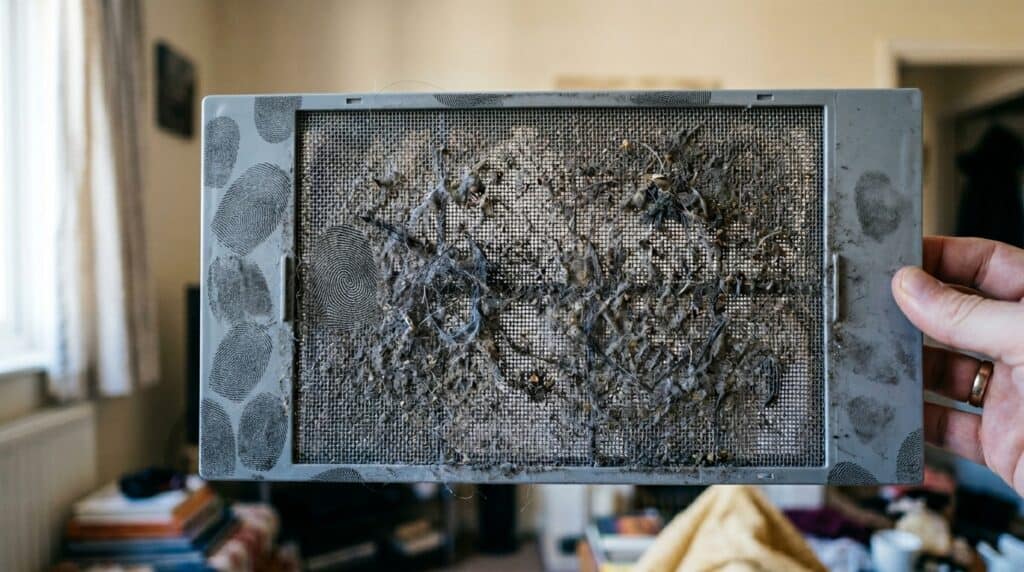
The air filter traps dust and small particles before they enter your HVAC system. It helps protect parts like the evaporator coil and keeps indoor air cleaner.
When the filter gets clogged, airflow drops. The blower fan has to work harder, but the air coming through the vents feels weak. You may start noticing lukewarm air instead of proper cool air.
If the blockage continues, ice buildup can form on the evaporator coil, which makes cooling even worse.
7. Thermostat Malfunction
Everything can look perfectly normal on the thermostat, but the system does not respond. No fan, no cooling, nothing changes even after adjusting the temperature.
When the thermostat fails to send the right signal, the air conditioner simply does not start its cycle. That means the fan stays off and airflow never begins.
The reason can be as simple as drained batteries or settings that are slightly off. Sometimes the fan mode is not set correctly. Other times, wiring issues or thermostat calibration problems interfere with how the thermostat communicates with the unit.
How to Troubleshoot an AC Fan That Is Not Spinning
Before you assume something serious, it is worth checking a few basic things. Sometimes the issue comes down to a simple setting or small oversight. A quick round of troubleshooting can help you understand whether it is something you can fix yourself or if it needs professional attention.
Check Thermostat Settings
Start with the thermostat. Make sure it is set to cooling mode and not just running the fan or sitting idle. Then check the temperature setting. It should be lower than the current room temperature, or the system will not start a cooling cycle.
Also, look at the fan mode. If it is on Auto, the fan runs only when cooling starts. If it is set to On, the blower fan should run continuously.
Inspect the Circuit Breaker
Open the panel and check the AC breaker position. If it has tripped, switch it back on once and see if the unit responds.
If it trips again, it usually points to an overload or an internal issue that should not be ignored. At that point, it is better to have it checked instead of resetting it again.
Look for Obstructions Around the Fan
Turn off the power, then check inside the condenser unit around the fan blades.
Clear out any leaves, dust, or debris buildup you find. While you are there, take a close look at the blades themselves. Damaged fan blades can also stop the fan from spinning properly or cause it to wobble.
Make sure there is enough open space around the unit so air can move freely through it.
Check the Air Filter
Remove the air filter and inspect it closely. If it is filled with dust or has not been changed in a while, it needs replacement. A clogged air filter restricts airflow, forcing the blower fan to work harder. This can affect overall cooling and comfort inside your home. It can also lead to increased energy bills, since the system uses more power to push air through a blocked filter.
Why Running an AC With a Non-Spinning Fan Is Dangerous
Letting your air conditioner run in this condition can create bigger problems in a short time. Without proper airflow, heat stays trapped inside the system, and important parts begin to struggle under that pressure. What starts as a simple issue can quickly turn into serious damage.
Here is what can happen if the system keeps running:
- Compressor overheating, which can lead to permanent damage
- Refrigerant pressure is going out of balance, affecting cooling performance
- Electrical faults that may damage internal components
- Issues like a blown fuse or even a leaking capacitor in severe cases
- Complete system breakdown, leading to costly repairs or full system replacement
It is best to turn off the unit as soon as you notice the fan not working and arrange for a proper inspection before using it again.
How to Prevent AC Fan Problems in the Future
Fan problems usually build up slowly. Dust collects, airflow gets restricted, and parts wear down without much notice.
A few simple things can help avoid that:
- Keep up with air filter replacement so airflow does not get blocked
- Check the condenser unit once in a while and remove anything stuck around the blades
- Have the system checked once a year for a proper professional diagnosis
- Keep vents open so air can move freely through the house
- If you notice unusual noise or vibration, get it looked at early
Restore Cooling Quickly When Your AC Fan Stops Spinning
When the fan stops, the AC does not just quit. It keeps running, but something feels off. The air is not right, the cooling feels uneven, and sometimes it starts blowing hot air out of nowhere.
This is where most people wait. A day or two, thinking it will be fine. Then it turns into something bigger. A broken fan belt, electrical faults, or a repair that could have been avoided.
If you are dealing with the same thing right now, it is better to have it checked before it gets worse.
HVAC Angel works on problems like this every day. We do not just swap parts and leave. We check the full system, from the capacitor and fan motor to wiring and airflow, so nothing gets missed. That means you are not calling again for the same issue a week later.
Our team keeps the process simple. Clear explanation, proper repair, and your cooling back the way it should feel. Book your service today and get it sorted before it turns into emergency repairs.
FAQs
Why is my AC running, but the fan is not spinning?
This usually points to a problem with the capacitor, fan motor, or power supply. The system may still run, but without the fan, airflow drops and leads to inadequate cooling. It can also be linked to electrical faults or a tripped breaker.
How much does it cost to fix an AC fan motor?
The repair cost depends on the issue. A simple capacitor replacement is cheaper, while a full fan motor replacement costs more. Labor, parts, and system condition all affect the final price, so it is best to have it checked first.
Is it safe to run the AC if the fan is not working?
Running the AC in this condition is not safe. Without proper airflow, heat builds up inside the system and can damage the compressor. This can quickly turn a smaller issue into a major repair.
How often should AC fans be inspected during maintenance?
AC fans should be checked during regular maintenance, usually once or twice a year. This helps catch early signs of wear, dust buildup, or motor issues before they affect airflow or cause the fan to stop working.
Talk to HVAC Angel about heating or cooling service. We explain the problem and the price before any work begins.
(206) 222-7194 Request a callback