 (206) 222-7194
AC Line Freezing Up? 4 Common Causes and How to Fix Each One
Dealing with a frozen AC line? Discover common causes, quick fixes, and expert tips to keep your system running smoothly.

 9 min read
 HVAC Angel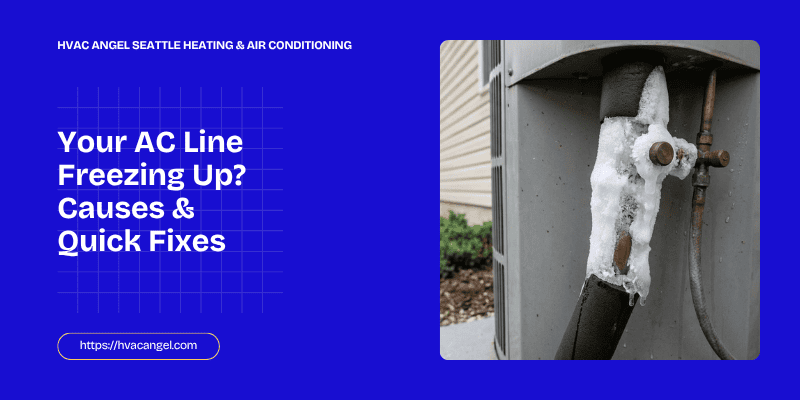
Ice on your air conditioner is not something you expect to see in the middle of summer. It looks out of place, and it is. What makes it worse is how easy it is to overlook. The system is still running, the thermostat is set where you want it, but the cooling feels weaker, and the air is not hitting the same. That thin layer of ice is a sign that something inside is already going wrong.
Leave it alone, and it can lead to water around the unit, higher energy use, and serious strain on parts that are not cheap to fix.
If you are the one dealing with this, it is worth understanding what is really happening before the damage grows. In this guide, we will discuss what causes this issue, how to fix it, and when it is time to call in a professional.
What Does “AC Line Freezing Up” Actually Mean?
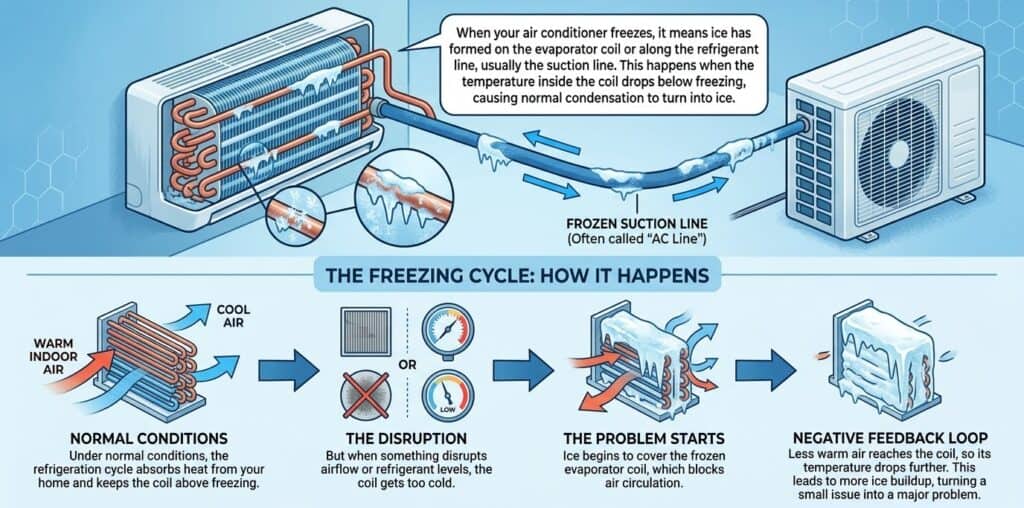
When your air conditioner freezes, it means ice has formed on the evaporator coil or along the refrigerant line, usually the suction line. This happens when the temperature inside the coil drops below freezing, causing normal condensation to turn into ice.
Under normal conditions, the refrigeration cycle absorbs heat from your home and keeps the coil above freezing. But when something disrupts airflow or refrigerant levels, the coil gets too cold.
From there, the problem starts. Ice begins to cover the frozen evaporator coil, which blocks air circulation. Less warm air reaches the coil, so its temperature drops further. This leads to more ice buildup, turning a small issue into a major problem.
4 Common Causes of AC Line Freezing Up
1. Airflow Problems (Most Common Cause)
Most freezing issues start here. If air is not moving properly through your HVAC system, the coil cannot absorb enough heat. As less heat reaches the coil, its temperature keeps falling, which creates the perfect condition for frost to form and spread.
That drop in airflow can come from several places, and most of them are easier to miss than you would expect.
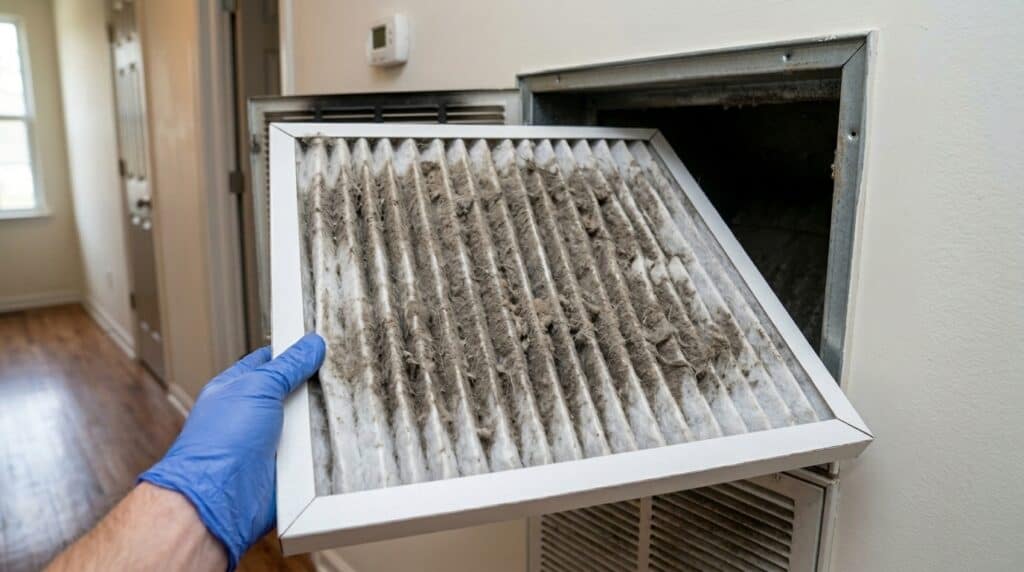
- Dirty or Clogged Air Filter: Your air filter is the first place to check. When it fills with dust and debris, it slows down air circulation. Less air reaches the evaporator coil, which means less heat is absorbed. The coil temperature drops, and freezing begins.
- Blocked Vents or Closed Registers: Check your air vents. Furniture, rugs, or even closed registers can restrict airflow. When air cannot move freely through the system, it creates airflow restriction, which directly affects how well your system can regulate temperature.
- Dirty Evaporator Coil: When dirt buildup covers the coil surface, it reduces heat transfer. Without enough heat coming in, the coil gets colder than normal, leading to a frozen coil.
- Blower Fan Issues: The blower fan keeps air moving across the system. If it stops working properly or runs weaker than usual due to a blower motor issue, the coil does not get enough warm air. As a result, the temperature inside the coil drops, which can lead to frozen pipes and ice forming over time.
- Ductwork Problems: Leaks or damage in your ductwork can prevent air from reaching the indoor unit. In some cases, ducts may collapse or develop gaps, which reduces the total airflow in the system. This loss of air is enough to cause the system to start freezing.
2. Refrigerant Issues
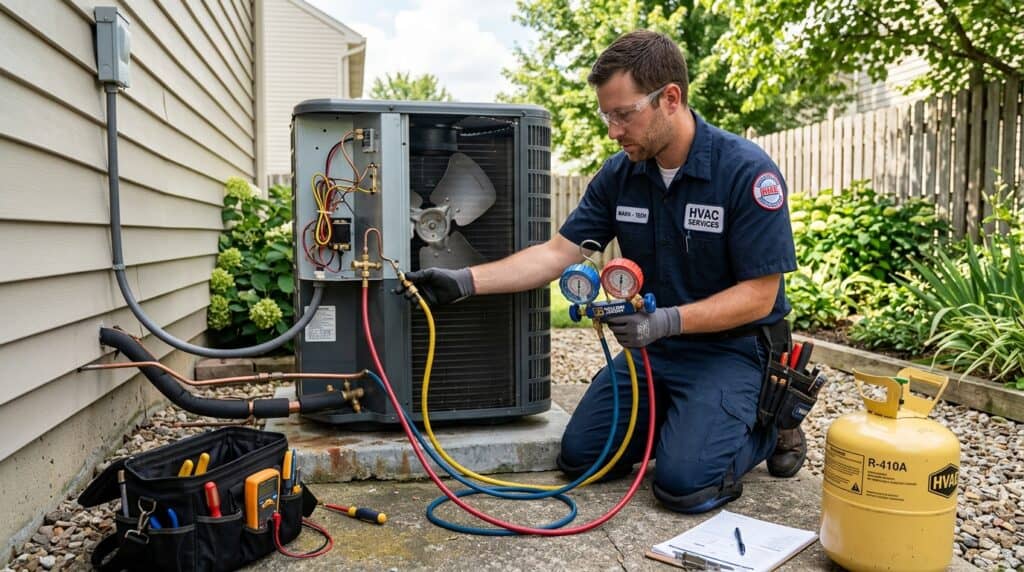
If airflow looks fine, the problem may come from the refrigerant inside your system. It controls pressure and cooling, so when something goes wrong here, freezing can start. Below are the common issues to look at:
- Low Refrigerant Levels: A refrigerant leak can lower the amount of refrigerant in your system. When levels drop, pressure also drops. This leads to a temperature drop inside the coil, which causes condensation to freeze.
- Restrictions in Refrigerant Lines: If the refrigerant line gets blocked or the filter drier is clogged, refrigerant cannot flow properly. This affects pressure inside the system and can lead to ice forming on the coil.
- Faulty Expansion Valve: The expansion valve controls how much refrigerant enters the coil. If it is not working correctly, it can disturb the flow and cause parts of the coil to get too cold, leading to ice buildup.
- Moisture Inside the System: Moisture inside the system can freeze and block the flow of refrigerant. This creates pressure changes and increases the chances of freezing.
3. Mechanical and Electrical Failures
In some cases, freezing starts because certain parts inside the HVAC system stop working properly. The unit may still run, but it cannot manage temperature and airflow correctly. It can lead to ice forming on the coil. These are the common problems:
- Indoor Fan Not Working: If the indoor fan stops while the air conditioner is running, air no longer passes over the coil. Without that flow, the coil temperature drops and ice begins to form.
- Faulty Thermostat or Sensors: A faulty thermostat or sensor can misread the indoor temperature. This can keep the system running longer than needed and increase the chances of freezing. Incorrect thermostat calibration can also lead to the same issue.
- Capacitor or Relay Issues: Capacitors and relays help key parts of the system start and operate. When they fail, components like the fan or compressor may not run correctly, which affects cooling and can lead to freezing.
- Control Board or Thermistor Failures: The control board and thermistor manage how the system responds to temperature changes. If they stop working correctly, the system may continue running without adjusting, which can cause the coil to get too cold and form ice.
4. Running AC in Low Outdoor Temperatures
Your air conditioner is built for hot weather. When it runs during cooler conditions, internal temperatures can drop too far and cause freezing.
- Using cooling mode during cold weather can cause the coil to reach a below-freezing temperature, turning condensation into ice.
- Systems without low ambient controls cannot adjust properly in cooler conditions, which increases the risk of a frozen coil.
- This problem is more common during mild seasons or late at night when outdoor temperatures fall, even if the system appears to be working normally.
Signs Your AC Line Is Freezing Up
You do not need tools to spot this problem. Your system gives clear signals if you pay attention.
- Ice or frost on the refrigerant line or near the indoor unit
- Weak airflow from the air vents, even when the system is on
- The air conditioner keeps running, but the room still feels warm, and the cooling feels off
- Water around the unit during thawing, caused by the melted ice buildup
- Hissing or bubbling sounds, which may point to a refrigerant leak
- Higher electricity bills due to reduced energy efficiency
These signs usually appear before the system stops working completely.
How to Fix a Frozen AC Line (Step-by-Step)
1. Turn Off the AC Immediately
The first step is to turn off the system. This helps prevent further ice buildup and protects the compressor from damage.
2. Let the System Thaw Completely
Keep the system off or switch it to fan mode. This allow the coil to thaw and clears ice from the refrigerant line, which can take 1 to 3 hours. Place towels near the unit to catch water from melting ice buildup.
3. Replace or Clean Air Filter
A dirty filter is one of the most common reasons behind restricted airflow. When the filter gets clogged with dust, it limits how much air moves through the system, which can lead to freezing. A quick filter replacement or cleaning can improve airflow right away and help restore normal cooling.
4. Check Vents and Airflow
Make sure all air vents are open and not blocked. Check around supply and return vents for furniture, rugs, or any other obstructions that can affect air circulation. Keeping interior doors open also helps maintain steady airflow throughout the space.
5. Inspect for Visible Issues
Take a close look at your system for anything unusual. Check for dirt buildup, water around the unit, or signs of a blocked condensate drain. Pay attention to any strange sounds that were not there before. Also, make sure the indoor fan is working properly. If the blower fan is not running, airflow drops and the chances of freezing increase.
6. Restart and Monitor
Turn the system back on and let it run for 15 to 30 minutes. Keep an eye on how the cooling system performs during this time. If the same issue returns, it usually points to a problem that needs proper diagnosis.
7. Call a Professional HVAC Technician
If the issue comes back, it is time to bring in an HVAC technician. Problems related to refrigerant, electrical parts, or internal components need expert handling and proper maintenance to prevent further damage.
How to Prevent AC Line Freezing
- Replace air filters on time to avoid airflow issues that can lead to poor cooling
- Schedule annual HVAC maintenance to keep the system in proper condition
- Keep coils clean, so the system can handle heat properly
- Make sure air moves freely throughout your home without blockages
- Avoid running the AC during cold weather conditions
- Pay attention to early signs like poor cooling so you can act before the problem gets worse
Stop AC Line Freezing Before It Gets Worse
Ice on your AC is not something that fixes itself. If you leave it alone, it usually turns into a bigger problem than it needs to be. What starts as a small patch of ice can lead to water around the unit, rising bills, or parts getting damaged.
If you have already tried the basic steps and the issue shows up again, it is better to stop. Issues like repeated freezing, weak airflow, or odd sounds are signs that something inside needs a proper check.
Call HVAC Angel to get it checked properly. HVAC Angel can handle AC repair and maintenance across Seattle and nearby areas, with 24/7 service when it is needed most. Their team carries out a thorough inspection and fixes the actual cause, so you are not dealing with the same issue again later.
FAQs
Why is my AC line freezing up in summer?
Freezing during summer usually points to a problem inside the system, not the weather. It can happen when airflow is restricted or when refrigerant levels are not correct. Without enough warm air moving through, the temperature inside drops too much, and moisture starts turning into ice instead of draining away.
Can I run my AC if the line is frozen?
It is better to turn the system off as soon as you notice ice. Running it in that condition can make the ice spread and put extra pressure on internal parts. This can turn a small issue into a much more expensive repair if ignored.
Is a frozen AC line dangerous?
It is not immediately harmful, but it should not be ignored. As the ice melts, it can lead to water around the unit. At the same time, the system will not cool properly, and internal components may start wearing out faster.
Can dirty air filters cause AC freezing?
Yes, a clogged air filter can block airflow. When air cannot move freely, the system cannot pull in enough heat, which causes the temperature inside to drop and ice to form over time.
Can freezing damage my compressor?
Yes, it can. If the system continues running with ice present, the compressor has to work harder than normal. With time, this added stress can lead to serious damage and costly repairs.
Talk to HVAC Angel about heating or cooling service. We explain the problem and the price before any work begins.
(206) 222-7194 Request a callback