You switch the AC on, and there it is again. A sharp whistling sound that was not part of the usual routine. It follows the airflow, repeating each time the unit starts up. Once you notice it, you cannot unhear it.
That kind of noise is not typical. Most of the time, it happens when air gets squeezed through a small gap or struggles to pass through something in its way. In Seattle, Bellevue, and Redmond, longer summer run times, dust, and pollen can make these airflow issues more noticeable.
It may not seem urgent, but that sound has a cause. In this guide, we will discuss what you can check safely and when it is time to call a technician, so that you can relax and enjoy your day without taking any stress.
Contents
- 1 What Does It Mean When Your AC Is Making a Whistling Noise?
- 2 6 Common Causes of AC Making a Whistling Noise
- 3 How to Identify the Source of the Whistling Noise
- 4 Step-by-Step Troubleshooting for a Whistling AC
- 5 Why You Should Not Ignore a Whistling AC
- 6 If the sound Is Not Fixed Yet, It Is Time to Call professional
- 7 FAQs
What Does It Mean When Your AC Is Making a Whistling Noise?
A whistling noise usually means something is off. The system is still running, but a part of it is not sitting or moving the way it should. That small change is enough to create a sound you were not hearing before.
Homeowners hear it in different ways:
- From one specific vent in a single room
- From several vents across the house
- Near the indoor unit
- Around the outdoor condenser
- Inside the walls where ducts run
It does not always behave the same way, either. The sound may show up only while the system is cooling, when the fan is running on its own, at startup, or throughout the entire cycle.
6 Common Causes of AC Making a Whistling Noise
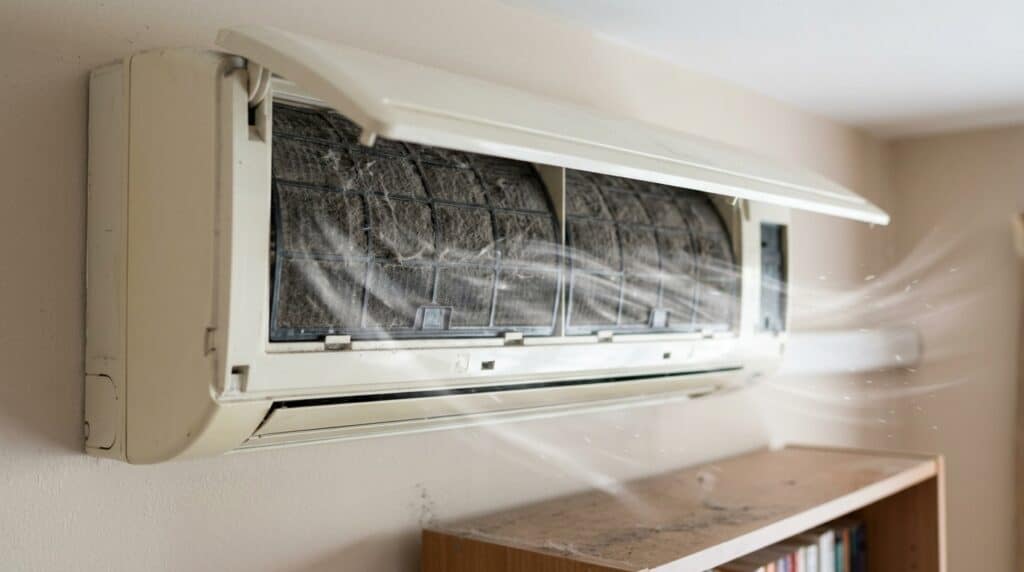
1. Dirty or Clogged Air Filter (Most Common Cause)
Check the filter first. When it is packed with dust, air cannot move through it easily. The unit keeps running, but the restriction can create that whistling sound.
You may also notice:
- Rooms are taking longer to cool
- Airflow that feels weaker than it used to
- Sudden rise in your electricity bill
Replacing the filter is simple and affordable. If you are not sure how often you should change them, HVAC Angel can check it during a service call and make sure it is set up correctly.
2. Blocked or Closed Air Vents
A vent does not have to be fully covered to cause trouble. Even being partly blocked can change the way air moves in that room. It happens after rearranging furniture or adding a rug. No one connects it to the noise at first.
Closing vents creates a similar problem. The air still moves through the system at the same force. With fewer open vents, it gets pushed harder, and that is when a sharp sound can show up.
If the whistle is tied to one room, that is usually where the change happened. Clear the vent. Make sure it is open. Then listen again.
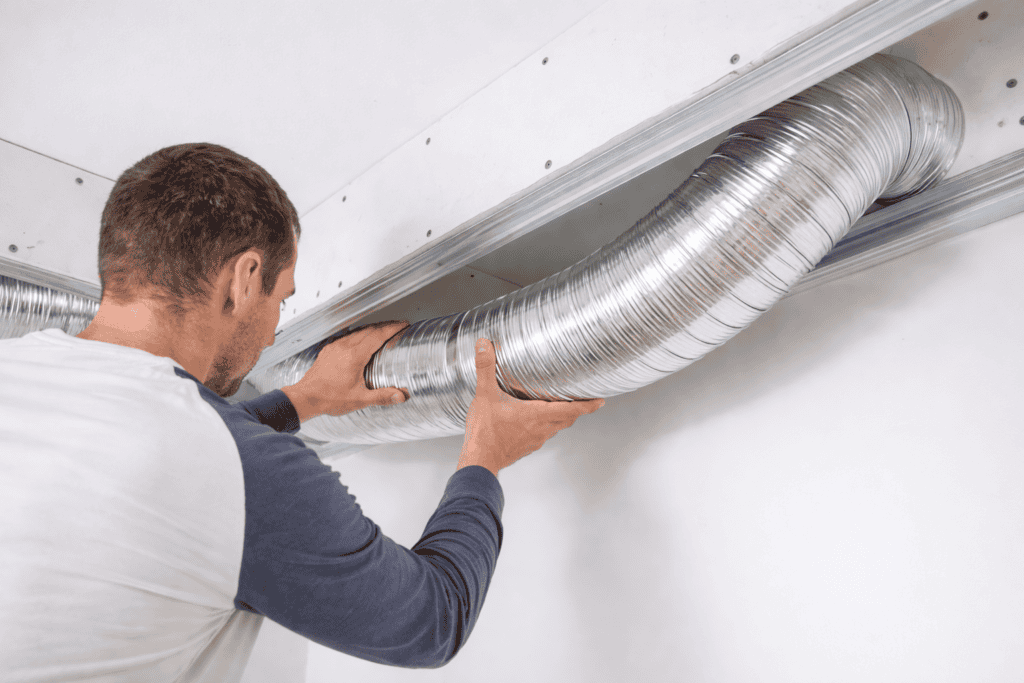
3. Leaky or Poorly Sealed Ductwork
A loose connection somewhere in the line can let air escape into the attic or crawl space. It does not take a large gap. Even a small opening can create that sharp sound as air pushes past it.
Homes in Seattle that still have older duct systems see this more frequently. It also comes up in houses that have gone through remodelling, where sections of ductwork were adjusted and not fully secured afterwards.
4. High Static Pressure Inside the HVAC System
Static pressure is the resistance air meets as it moves through the duct system. When airflow is restricted, pressure usually rises inside the equipment.
You will see it in homes with ductwork that is too small for the space and filters that have not been changed. Each of these slows the movement of air.
As pressure increases, the air gets forced through tight gaps within the system. That is when the whistling starts. If it continues unchecked, extra strain can wear down the blower motor, stress the coils, and pull at duct seams.
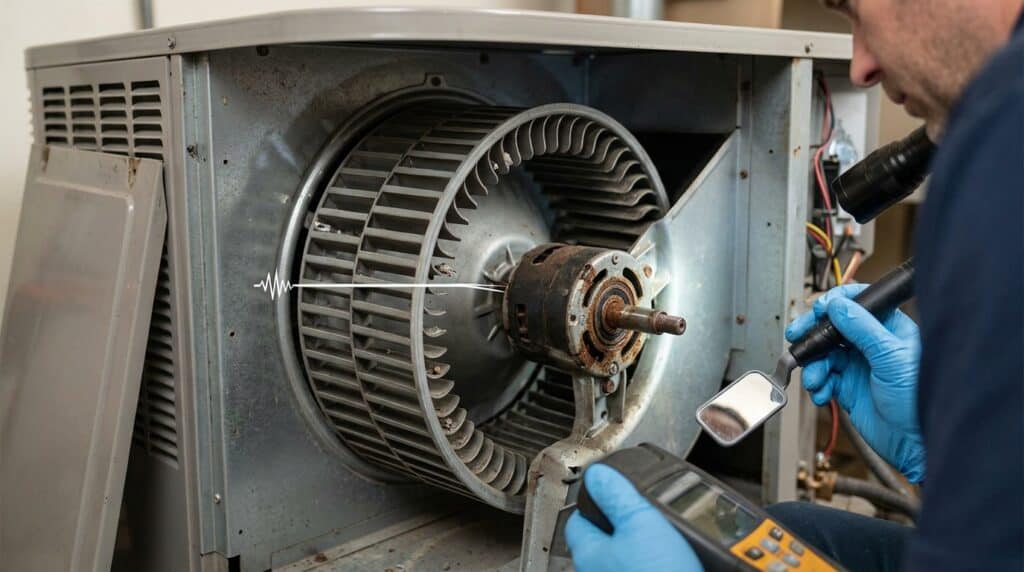
5. Blower Fan or Motor Issues
The noise can come from inside the unit. The blower spins fast. If a blade is loose or slightly bent, it can create a sharp tone as it turns. A motor that is wearing out can do the same thing.
Pay attention if the sound changes with fan speed. If it gets louder or sharper as the system ramps up, the blower is likely involved.
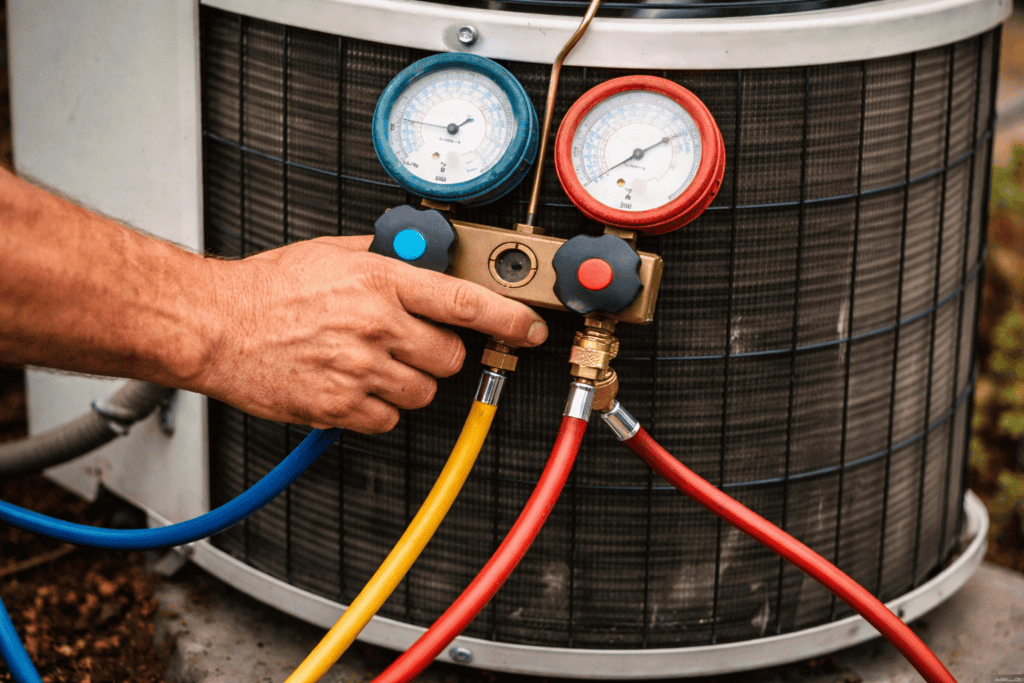
6. Refrigerant Leak or Compressor Pressure (Serious Case)
If the whistling turns into more of a hiss and the house is not cooling properly, take it seriously. Ice on the refrigerant lines or air that feels warm instead of cool are not small issues.
A leak in the refrigerant line can make that sound as gas escapes. Issues inside the compressor can also affect both the sound and how well the system cools.
This is not a repair to experiment with. Refrigerant work needs proper specialised tools, and the safest move is to turn the system off and call a professional.
How to Identify the Source of the Whistling Noise
First, you need to know where the sound comes from and what changes when the system runs. The pattern usually tells you more than the volume.
| Symptom | Likely Cause |
| Whistling from one vent | Blocked or partially closed vent |
| Whistling from multiple vents | Airflow restriction or dirty filter |
| Noise stops after replacing the filter | Clogged air filter |
| Whistling with reduced cooling | Duct leak or refrigerant issue |
| Sound coming from inside the unit | Blower or internal component problem |
If sound is coming from just one room, look at that vent first, and if you can hear it in several rooms, the problem is probably not just one vent.
Step-by-Step Troubleshooting for a Whistling AC
A whistling sound does not automatically mean something major failed. Sometimes it comes down to a small change that happened without you noticing. Go through this in order and see what changes.
Step 1: Turn Off the System
Start by turning the AC system completely off. Let the fan and compressor stop running before you begin checking anything. This is important for both safety and accuracy.
When the system is running, airflow can make it difficult to hear where the sound is coming from. Turning it off allows you to inspect parts of the system calmly without moving air or vibration getting in the way.
Step 2: Pull the Filter
Next, remove the air filter from the return vent or the indoor unit. Hold it up in normal light and look through it.
If the filter looks dark, dusty, or packed with debris, it is likely restricting airflow. When air struggles to pass through a clogged filter, it can create a whistling or high-pitched noise as it squeezes through tight spaces. Filters clog fast during pollen season.
Step 3: Look at the Vents
Walk through each room and check the air vents. Make sure none of them is fully closed or partially blocked.
Furniture, rugs, curtains, or even wall decorations can interfere with airflow. When vents are restricted, air pressure builds up inside the ducts, and that pressure can produce a whistling sound as air forces its way through smaller openings.
Open every vent fully and clear away anything covering them. Even a small obstruction can affect how air moves through the system.
Step 4: Check Visible Ductwork
If any of your ductwork is visible, such as in the attic, basement, or utility room, take a quick look at the connections.
Loose joints, small gaps, or torn flexible ducts can create narrow openings where air escapes. As the air pushes through these openings, it may produce the same whistling sound you hear in the house.
Step 5: Run It Again
Turn the system back on and listen. If the sound fades, you likely found the cause. If it stays the same, the source is probably inside the equipment.
Why You Should Not Ignore a Whistling AC
If the AC is still cooling, it is tempting to ignore the noise. Most people do. But that sound shows up for a reason.
When airflow stays restricted for too long, it can:
- Put extra strain on the blower motor
- Drive up energy use month after month
- Shorten the overall life of the equipment
Small duct gaps rarely seem small. Vibration and pressure can widen them, which makes the noise worse and the system less efficient.
Meanwhile, the system keeps running like that, day after day. Parts do not complain. They just wear down quietly until something finally stops working.
If the sound Is Not Fixed Yet, It Is Time to Call professional
You can live with a whistle for a while. Many people do. The house cools, nothing shuts down, and it feels easier to ignore it. But that sound usually means air is not moving the way it should.
Some causes are minor. Others are not. What matters is catching it before extra strain turns into real damage. Motors wear out faster. Coils freeze. Duct gaps widen. Repairs grow more expensive the longer the system runs under pressure.
If you are in Seattle or nearby, HVAC Angel can take a look and tell you exactly what is going on. They deal with these airflow and pressure problems every day. Whether it turns out to be a duct issue, a blower problem, or something deeper, you will get a straight answer and clear pricing before any work starts. If it quits in the middle of the night, they handle emergency calls, too.
If the whistle has not stopped, book the inspection and get clarity right now.
FAQs
Is it safe to run my AC if it’s making a whistling noise?
In case your AC machine is still blowing cold air, you can turn it on temporarily. However, a whistling noise often indicates the beginning of something limiting air circulation. Allowing your air conditioning system to run for too long may put a strain on internal components. It is advisable to get it checked before the problem escalates.
Can a dirty air filter really cause a whistling sound?
Yes. When the filter is clogged, air cannot pass easily. Your system still runs and tries to circulate cool air, but the blocked filter makes it harder. That strain can cause a whistling noise. In many cases, putting in a clean filter fixes it right away.
Why does my AC whistle only from one vent?
When the noise is located in one vent, the problem is normally associated with that section of ducting. The vent can either be blocked or partially closed down, and this can limit the air supply to a room. The vent connection behind should be checked at times to exclude the possibility of a loose joint.
Does a whistling AC mean I have a refrigerant leak?
A whistling sound does not automatically mean there is a refrigerant leak. The problem in the majority of cases is connected with airflow. In case of low refrigerant, the AC tends to have difficulties in generating cool air. Ice can also develop on the lines, or there may be a hissing noise that can be heard close to the equipment.
How much does it cost to fix a whistling AC in Seattle?
The price will be based on the source of the noise. When the filter becomes clogged and slows down airflow, it is cheap to repair. Pricing is usually moderate for sealing a small duct gap, but major AC unit repairs are more expensive. A proper examination will reveal what repair must be done.